


Pelvic-floor problems are often associated with women and childbirth, but the pelvic floor is just as important for men.
These muscles play an important role in bladder and bowel control and sexual function. They can become particularly important for men preparing for or recovering from prostate surgery.
Pelvic-floor muscle training is commonly recommended following prostate surgery to help regain urinary control.
At The Form Practice in Hardwick, Cambridge, we offer PelviPower, a non-invasive pelvic-floor training system that can be used by both men and women.
What is the male pelvic floor?
The pelvic floor is a group of muscles and connective tissues forming a supportive base at the bottom of the pelvis.
In men, the pelvic-floor muscles help support the bladder and bowel and contribute to control of the urethra and rectum.
They also have a role in sexual function.
Like other muscles in the body, the pelvic-floor muscles can become weaker or function less effectively.
Why is the pelvic floor important after prostate surgery?
Urinary incontinence is a relatively common problem following some forms of prostate surgery.
For example, after a radical prostatectomy for prostate cancer, some men experience urinary leakage while recovering bladder control.
Pelvic-floor muscle exercises are therefore often recommended before and after surgery.
Men undergoing procedures for an enlarged prostate may also experience changes in urinary symptoms, although the type and cause of these symptoms can differ.
If you are preparing for prostate surgery, your hospital team, specialist nurse, physiotherapist or doctor should advise you about appropriate pelvic-floor rehabilitation.
Why can pelvic floor exercises be difficult?
Traditional pelvic-floor exercises can be very effective, but first you need to identify and contract the correct muscles.
This isn’t always easy.
Some people unknowingly contract their abdominal, buttock or thigh muscles instead. Others struggle to produce a sufficiently strong pelvic-floor contraction or find it difficult to maintain a regular exercise programme.
This is one reason why technologies designed to stimulate pelvic-floor contractions have been developed.
What is PelviPower?
PelviPower uses electromagnetic stimulation to activate the nerves and muscles of the pelvic floor.
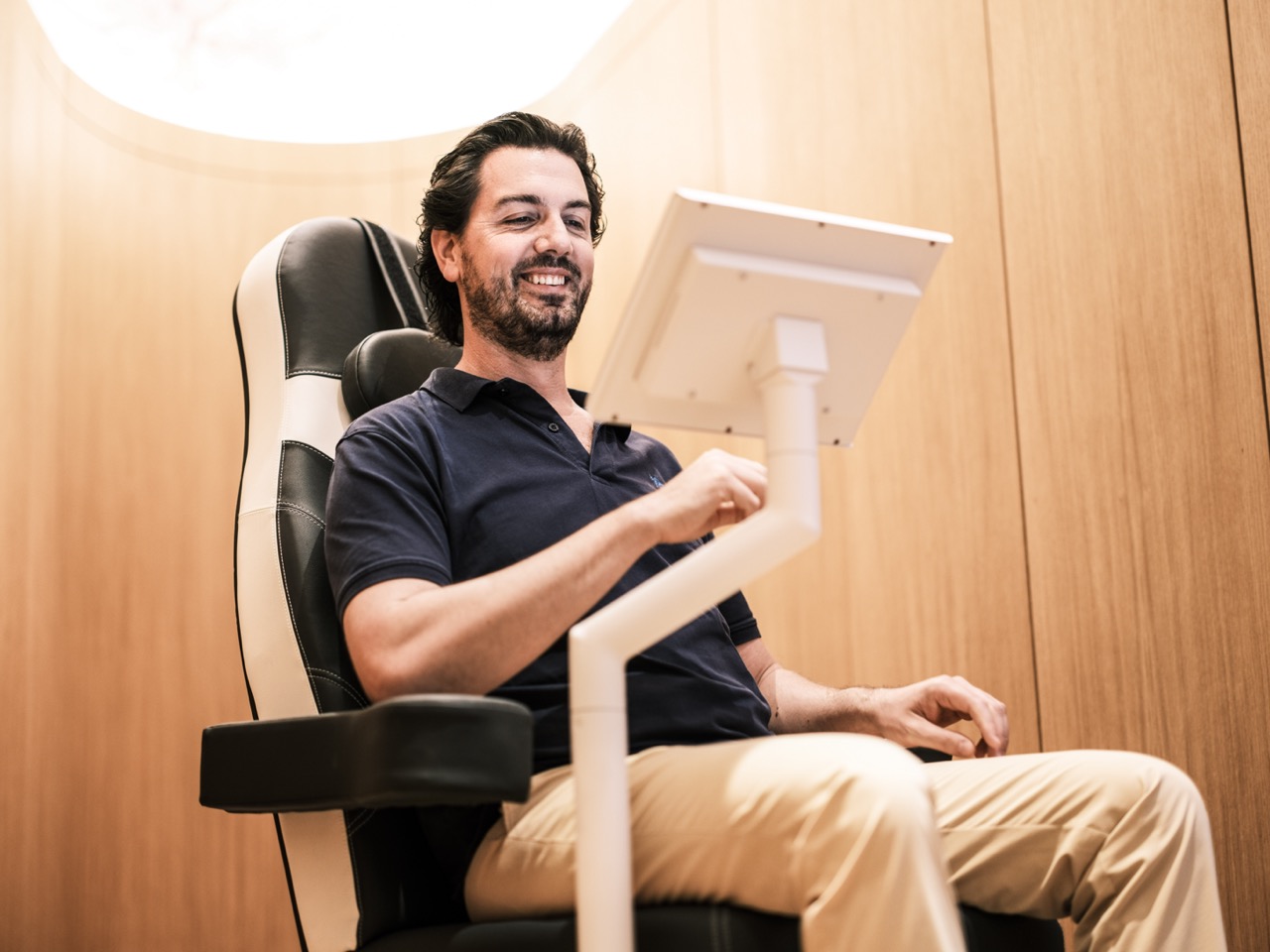
You remain fully clothed and sit on a specially designed chair while the electromagnetic field produces repeated contractions of the pelvic-floor muscles.
The intensity is adjustable and should be set according to the individual.
There is no internal treatment and no need to undress.
Can PelviPower help after prostate surgery?
Electromagnetic stimulation has been investigated as an approach to pelvic-floor rehabilitation and urinary incontinence.
For men recovering from prostate surgery, PelviPower may be considered as part of a broader pelvic-floor rehabilitation programme.
However, recovery following prostate surgery varies considerably between individuals, and PelviPower shouldn’t be considered a guaranteed solution for post-prostatectomy incontinence.
It’s also important to distinguish between supporting rehabilitation following prostate treatment and treating the underlying prostate condition itself.
PelviPower does not treat prostate cancer or an enlarged prostate.
What about erectile dysfunction?
Erectile dysfunction can occur following prostate surgery and has many possible causes.
The pelvic-floor muscles play a role in male sexual function, and pelvic-floor muscle training has been investigated for erectile dysfunction.
Electromagnetic pelvic-floor stimulation is also being studied in this area.
However, erectile dysfunction following prostate treatment can involve nerve, vascular, hormonal and psychological factors as well as pelvic-floor function.
If you’re experiencing erectile dysfunction, particularly following prostate cancer treatment, it is important to discuss this with your medical or specialist prostate team.
Can men use PelviPower before prostate surgery?
Pelvic-floor exercises are sometimes recommended before prostate surgery so that a man becomes familiar with activating these muscles before the operation.
If you’re considering PelviPower before planned surgery, discuss this with your medical team first.
We can then consider whether PelviPower is appropriate alongside the advice you’ve received from your surgeon or specialist team.
What happens during a PelviPower session?
A PelviPower session is straightforward.
You sit on the PelviPower chair fully clothed while the intensity is gradually adjusted.
You’ll feel repeated contractions of the pelvic-floor muscles during the session.
A typical session takes around 15 – 20 minutes.
Before starting, we’ll discuss your relevant medical history, symptoms and goals and check that PelviPower is appropriate for you.
PelviPower for men in Cambridge
At The Form Practice in Hardwick, Cambridge, PelviPower provides a discreet and non-invasive way for men to train their pelvic-floor muscles.
If you’re experiencing urinary leakage or pelvic-floor weakness, including following prostate treatment, you can contact us to discuss whether PelviPower may be appropriate.
If you’re currently receiving treatment for a prostate condition or recovering from prostate surgery, we recommend continuing to follow the advice of your GP, consultant or specialist prostate team.
Book a free PelviPower trial to experience the technology and find out more.