


Inflammation is part of the body’s natural response to injury and plays an important role in healing. However, persistent inflammation can also be associated with pain, swelling and reduced function in some musculoskeletal conditions.
One treatment that has been studied for its potential effects on pain and inflammation is therapeutic laser.
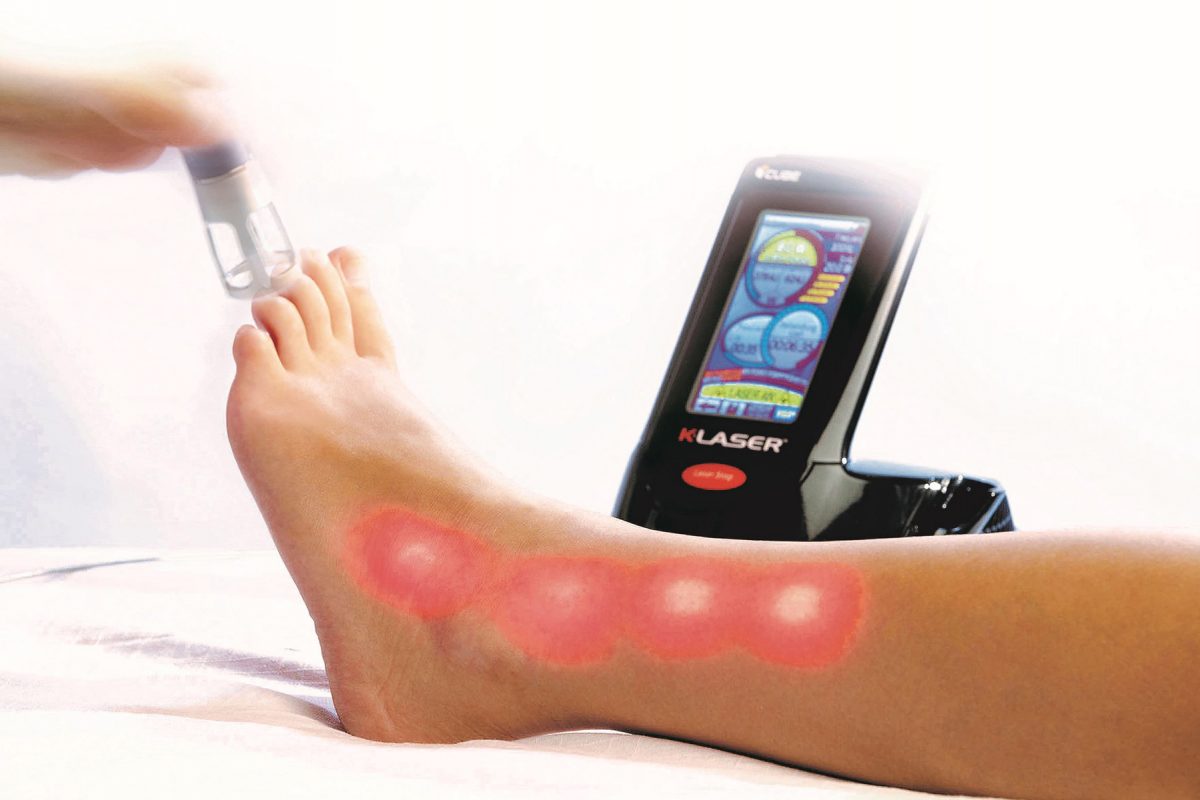
At The Form Practice in Hardwick, Cambridge, we use K-Laser, a form of high-intensity therapeutic laser, for a range of musculoskeletal problems.
So how does it work, and what role might it play in managing pain and inflammation?
What is K-Laser therapy?
K-Laser uses specific wavelengths of red and near-infrared light which are delivered into the tissues being treated.
The interaction between light and biological tissue is known as photobiomodulation.
Research into photobiomodulation has investigated how light energy can influence cellular processes and the biological mechanisms involved in inflammation, tissue repair and pain.
Unlike a surgical laser, K-Laser doesn’t cut or remove tissue. Treatment is non-invasive, with the laser handpiece moved across the area being treated.
Why isn’t all inflammation bad?
We tend to think of inflammation as something that needs to be eliminated, but that isn’t quite right.
Inflammation is an important part of the body’s response to injury. It helps initiate processes involved in protecting and repairing damaged tissue.
The problem can arise when inflammation is excessive or persists for longer than necessary, contributing to ongoing pain or reduced function.
This distinction is important because the aim of treatment isn’t simply to “switch off” the body’s inflammatory response.
How might therapeutic laser influence inflammation?
Research suggests that photobiomodulation can influence a number of biological processes involved in inflammation and tissue repair.
These effects are complex and continue to be investigated.
Potential mechanisms include effects on cellular energy production, circulation and inflammatory signalling pathways.
However, laboratory findings about how laser affects cells shouldn’t automatically be interpreted as proof that it will successfully treat every inflammatory condition.
The clinical evidence varies considerably according to the condition being treated and the type and dose of laser used.
What musculoskeletal problems has laser therapy been studied for?
Therapeutic laser has been investigated for a number of conditions associated with pain and inflammation, including:
- Tendon problems
- Osteoarthritis
- Some forms of back and neck pain
- Plantar heel pain
- Muscle and soft-tissue injuries
- Some sports injuries
Results vary between conditions and between individual patients, which is why an appropriate assessment is important before deciding whether K-Laser should form part of treatment.
K-Laser for tendon problems
Tendon problems such as Achilles tendinopathy and tennis elbow can involve a complex combination of changes within the tendon rather than simply “inflammation”.
This is another reason why identifying the nature of a problem matters.
Where appropriate, K-Laser may form one part of a wider approach that could also include exercise, rehabilitation and changes to the activities placing stress on the tendon.
K-Laser for joint pain
Therapeutic laser has also been investigated for painful joint conditions, including osteoarthritis.
For someone experiencing joint pain, treatment will depend on the underlying problem and may involve more than one approach.
K-Laser may be considered alongside hands-on treatment, exercise and advice where appropriate.
Can K-Laser be combined with other treatments?
Yes. At The Form Practice, K-Laser can be provided as a stand-alone treatment or incorporated alongside other treatments.
Depending on your individual assessment, these might include:
- Osteopathy
- Sports therapy
- Massage
- Exercise and rehabilitation
- INDIBA therapy
Using more than one approach doesn’t necessarily mean that more treatment is better. The important consideration is which treatment, or combination of treatments, is appropriate for the individual.
Is K-Laser suitable for everyone?
No.
Before treatment, we will discuss your symptoms and relevant medical history to determine whether K-Laser is appropriate.
Protective eyewear is worn during treatment, and the laser should be administered by someone appropriately trained in using the equipment.
If your symptoms indicate that medical investigation or another form of treatment would be more appropriate, we will advise you accordingly.
K-Laser therapy in Cambridge
At The Form Practice in Hardwick, Cambridge, K-Laser is one of the technologies we use in the management of musculoskeletal problems.
If you’re experiencing persistent muscle, tendon or joint pain and would like to know whether K-Laser could be appropriate for you, contact The Form Practice or book an appointment to discuss your symptoms.